
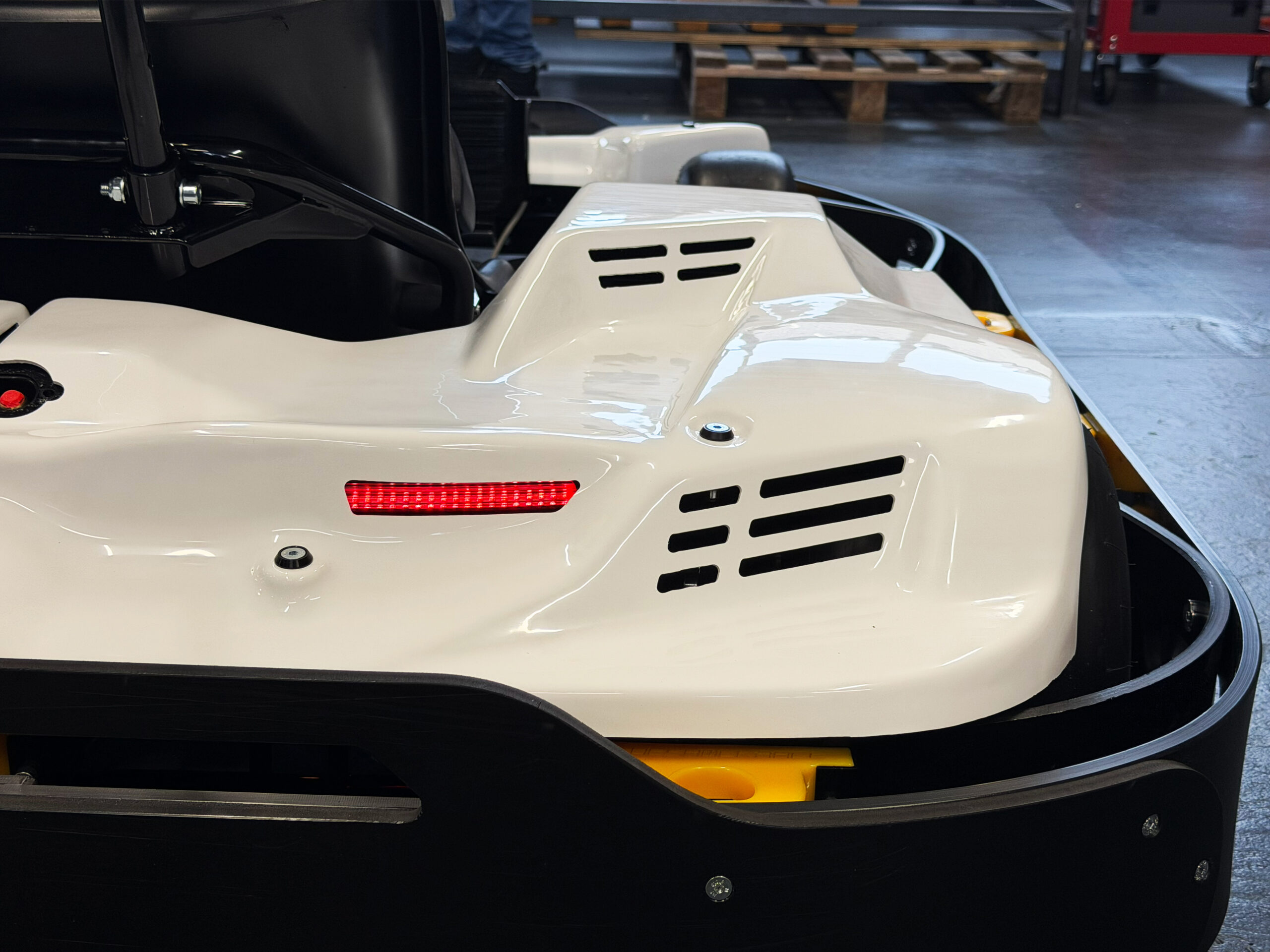
After ten years of engineering, testing, and continuous iteration, Blue Shock Race has officially launched its next-generation electric karting system: Gen 2.5. More than just an upgrade, Gen 2.5 represents a new benchmark in battery capacity, cooling, power delivery, and intelligent infrastructure for both rental and racing karts.
This milestone isn’t just technological. It’s personal. It all began with a promise — to skeptics who doubted electric performance — that BSR would deliver zero-compromise electric racing machines. And now, BSR stands at the forefront of global electric karting, with multi-million-euro technology sold in over 40 countries, delivering the world’s leading power units for indoor and outdoor operations.
What Is Gen 2.5 — And Why Does It Matter?
Since 2019, BSR has adopted a generational technology model. Every 2–3 years, we introduce a new fundamental upgrade — not just a feature tweak, but a complete redesign based on real-world data, operating experience, and partner input.
Gen 2.0 introduced modular lithium battery systems.
Gen 2.2 advanced our charging and telemetry capabilities.
Now, Gen 2.5 marks the first public release of our newest rental kart series, with race units and fleet systems to follow.
This generation reflects thousands of hours of international testing, including harsh conditions ranging from -20°C to +40°C, as well as operating fleets of 100+ karts with complex battery swap cycles. Every success — and every failure — has taught us something. And Gen 2.5 is the result.
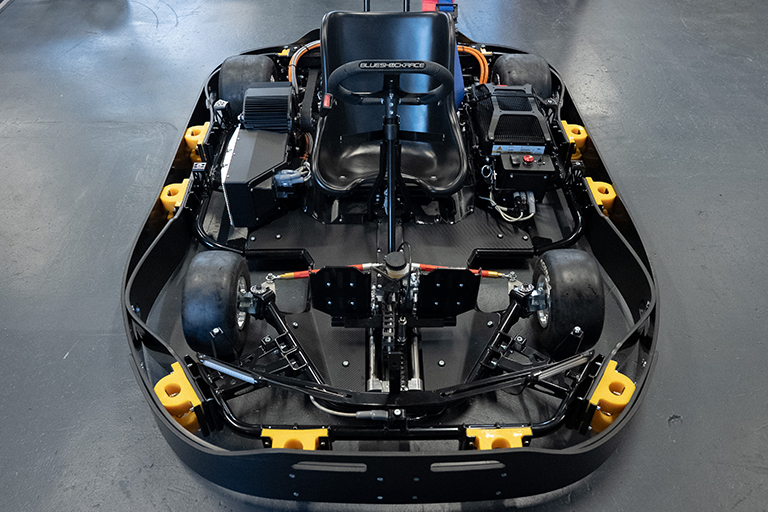
What’s New in Gen 2.5: Inside the Technology
1. Double the Battery Capacity
BSR rental and leisure karts now operate for 45–60 minutes indoors and 25–40 minutes outdoors per charge. This extended runtime is essential for large-scale fleet operations and longer entertainment sessions.
2. Advanced Air-Cooled Battery Architecture
Gen 2.5 introduces a brand-new cell design, radiator integration, and optimized cell chemistry. Our thermal tests under full racing loads (up to 40 kW discharge) demonstrated that we can maintain battery health while operating at a nominal power of up to 10 kW and a boost power of up to 12 kW for outdoor racing karts — with no overheating or degradation.
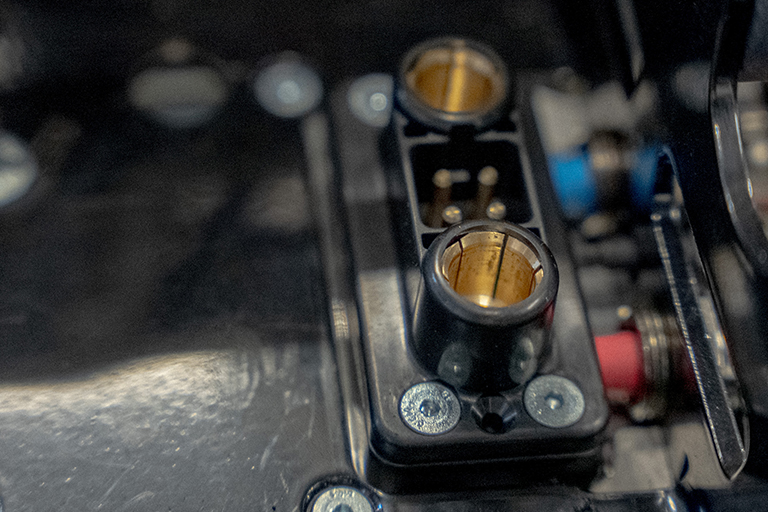
3. New High-Performance Power Contacts
Engineered from scratch, our latest contact system delivers six times higher current transfer (capable of handling up to 60 kW of power) and durability under fast-swap, high-load scenarios. This is one of the most critical upgrades in long-term reliability for rental fleets.
4. 3x Faster Charging Cycles
BSR quick-swap systems now recharge up to three times faster than previous versions — in some indoor applications, we achieve charging times faster than discharge rates, even under peak load. Outdoor fleets can maintain stable temperatures of 25–40°C during continuous sessions, enabled by our intelligent dock systems.
5. Integrated CAN Communication & Custom Battery Logic
Each battery and dock is now equipped with CAN-based monitoring, enabling BSR to synchronize data, simulate operational patterns, and customize charge profiles per venue. This means more innovative lifecycle management, reduced operational cost, and customized performance for every karting center.
6. Ready for VR, AI, and Future Systems
Our Power Unit is compatible with all CAN-based peripherals — enabling VR racing systems, AI driving modules, gamification layers, and autonomous safety tools. Already in development with partners across aviation, mobility, and robotics, Gen 2.5’s control architecture goes beyond karting.
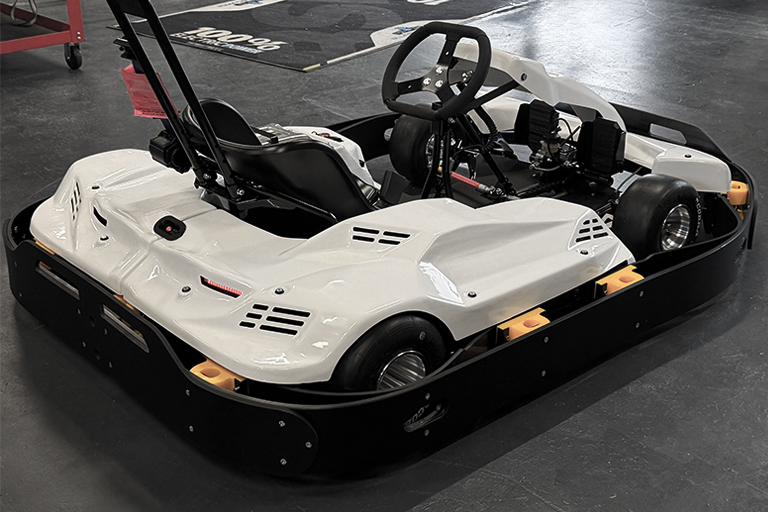
Tested. Proven. Trusted by Industry Leaders.
This isn’t just theory. Birel ART, one of the world’s leading kart chassis manufacturers, has already begun integrating Gen 2.5 technology into their electric rental fleets.
Even more remarkably, a private aviation company in the U.S. is testing the BSR Gen 2.5 battery and power systems in onboard auxiliary and mobility modules — further proof that low-voltage, high-power technology, when done right, can cross into aerospace.
Real Data, Real Progress
The Blue Shock Race Gen 2.5 platform is not a theory – it is the culmination of deep field experience, data-driven refinement, and global scalability.
Over the past decade, BSR has sold more than 2,000 power units worldwide, with operational technology active in over 40 countries. However, perhaps more importantly, BSR systems are already integrated into over 30 full-scale commercial projects, ranging from dedicated indoor karting centers to large-scale outdoor tracks and multi-site entertainment hubs.
These deployments span extreme climates – from Arctic-level cold (-15 to -20°C) to high-heat zones exceeding +40°C – with consistent reliability and performance.
In multiple fleet environments, BSR systems have been successfully implemented to run large-scale operations with intelligent battery swap infrastructure, optimized charging, and real-time data synchronization across complex kart networks.
This isn’t just another product cycle.
It’s one of the most significant technological leaps in electric karting on the global stage this year – and it’s already delivering results.
R3 Chassis: Practical Innovation Meets Scalable Design
The all-new BSR R3 kart chassis has been reengineered from the ground up — not just for better performance, but for smarter operations and broader usability across karting centers of all sizes.
Here are the five most impactful upgrades:
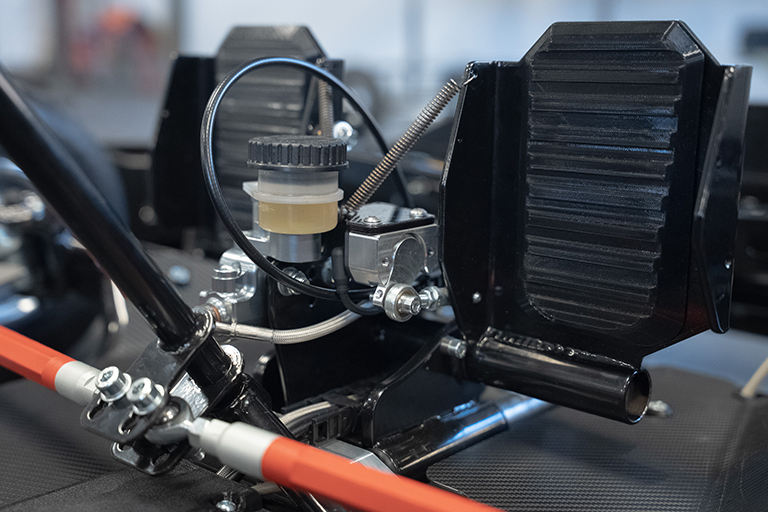
1. Adjustable Dual-Pedal System
R3 now supports a bidirectional pedal configuration, making it suitable for both junior and adult drivers in the same kart chassis. This eliminates the need for separate fleet categories and significantly lowers the entry cost for smaller venues and multipurpose tracks.
2. Reinforced Bodywork and Material Durability
The R3 introduces a new generation of bodywork built with more resilient plastic materials and a shock-absorbing design. These enhancements improve crash resistance and structural longevity, offering a clear durability upgrade over the previous Gen 2.2 models.
3. Impact-Resistant Lighting System
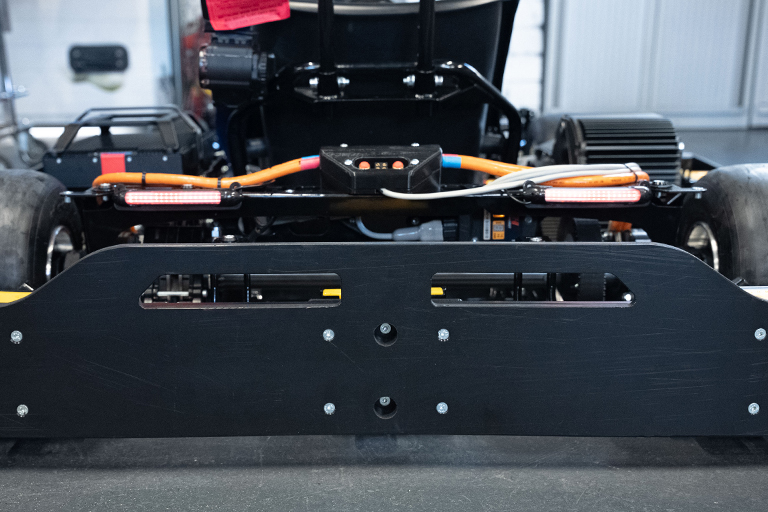
R3’s lighting modules are now externally mounted yet flexibly deformable, meaning they can absorb impact without breaking. This design simplifies post-collision maintenance and enhances visibility for nighttime racing and larger-scale outdoor events, thanks to its stronger LED output.
4. Simplified Maintenance Architecture
With a streamlined component layout and modular cable architecture, each electrical node in the kart can now be replaced independently — without dismantling the entire wiring system. Service access points are repositioned for faster repairs, providing technicians with quicker access using fewer tools and resulting in less downtime.
5. Full CAN Communication Integration
Every critical component in the R3 is now integrated into a unified CAN-based communication system, enabling advanced applications like real-time kart monitoring, remote diagnostics, fleet management, and future expansions into VR integration, safety automation, and AI-assisted driving systems. This chassis is not just a shell — it’s a scalable platform for data and control.
Together, these improvements position the R3 as a highly adaptable, durable, and service-friendly kart that scales with the operational and technological demands of modern karting venues.
Contact Information
For Further Inquiries
blueshockrace.com, info@blueshockrace.com, +1 (484) 585-0115 (the U.S.A.), (+371) 2046-5432 (the E.U.)
