

Kandava, Latvia | October 11, 2025
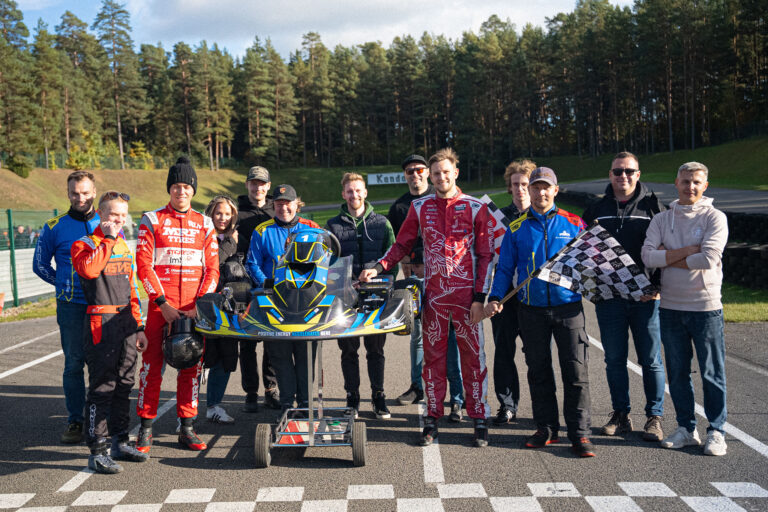
Blue Shock Race (BSR) has redefined the limits of electric karting by completing the world’s first 4-hour endurance race with a fully electric kart, running alongside high-performance combustion karts powered by 125cc, 2-stroke, 34hp engines with two-gear transmissions — a class widely recognized for its speed and complexity. This groundbreaking event wasn’t just about participation — it served as a live demonstration that BSR’s electric platform can meet the endurance demands of even the most power-dense and technically advanced karting formats, proving electric isn’t just an alternative — it’s a contender.
From Testing to Track: The Mission Behind the 4H Race
One week before race day, BSR conducted a 2-hour pre-test at the Jelegva circuit. The objective was clear: simulate the rhythm, energy cycles, and pit stop strategy (10 mandatory 3-minute stops + one 10-minute long pit), ensuring our system could sustain the planned 16–18 min stints per battery using our BSR-X4 kart setup.
Encouraged by these results, the team aimed to enter the event with an X5 configuration — a more aggressive energy map and power output version. Simultaneously, an internal experimental X6 version was prepared for comparative diagnostics (not public or homologated).
Unexpected Software Error: The Wrong Kart. The Wrong Data.
On race day, despite careful planning, the team discovered a critical mismatch. Instead of the intended X5 software setup, only the X4 and X6 firmware files were available. Assuming X5 was active, the team tried to compensate for 2-second lap deficits by adjusting gear ratios, not realizing that the base power map was incorrect.
After the initial stints, everything seemed to be functioning correctly — we were running on the X4 setup, and the MyChron 6 telemetry system was fully operational, providing critical live data that supported an efficient energy strategy. However, once the team realized that the planned X5 version had not been loaded, a mid-race decision was made to switch software manually.
Due to time pressure, a fallback version had to be installed — one that wasn’t properly calibrated or compatible with MyChron 6, resulting in a total loss of real-time telemetry data. From that point onward, the drivers had to rely solely on instinct, experience, and visual cues, as all digital feedback was effectively cut off.
Three Drivers, One Vision: Who Drove the Challenge?
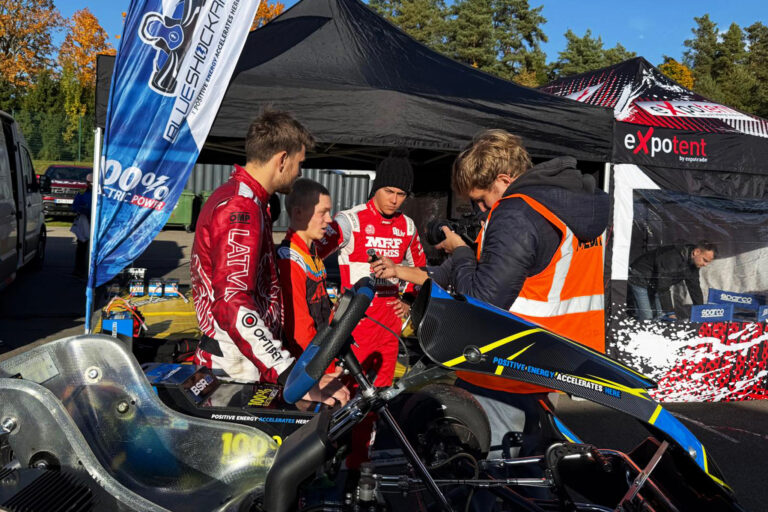
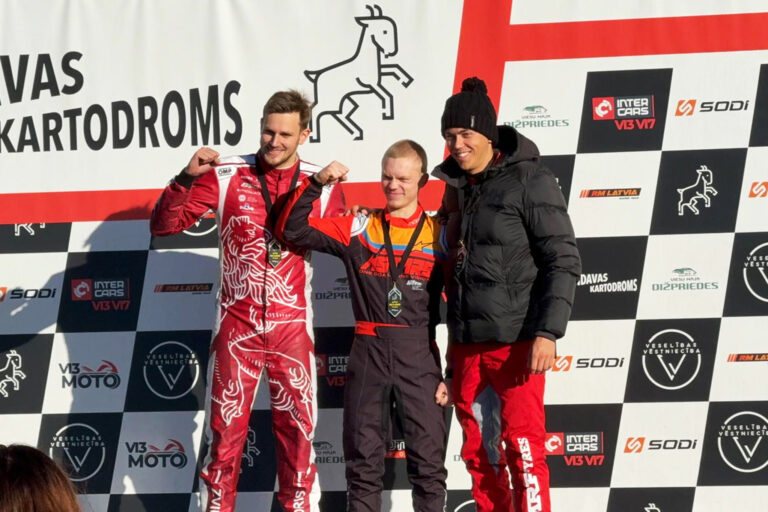
This endurance feat wasn’t achieved in isolation. The pilot lineup brought world-class motorsport credentials:
- Mārtiņš Sesks – WRC Driver
- Valters Zviedris – Porsche GT Racing Driver
- Richards Vecvagars –Pro Karting Racing Driver
Each brought professional-level control and adaptive decision-making to manage without real-time telemetry. Their collective effort allowed BSR to complete 246 laps (≈250 km) just 6% off the pace of the top internal combustion entries.
Hardware Reliability in Extreme Conditions
The final laps added unexpected drama: in the last 3 laps, Mārtiņš Sesks experienced power unit restarts, initially suspected to be caused by thermal protection kicking in due to high load and ambient temperature. However, after the race, a complete teardown and diagnostic investigation at BSR’s facilities confirmed that the issue was not related to overheating.
Instead, the cause was traced to a safety relay component — one that had been in use for over 7 years — which had begun to degrade and intermittently fail under peak stress. It ultimately started to give out during the final laps, leading to unexpected power drops.
Despite this, the aged power unit not only survived the race but demonstrated remarkable reliability and endurance, reinforcing BSR’s commitment to long-term performance under real-world racing conditions. This event featured:
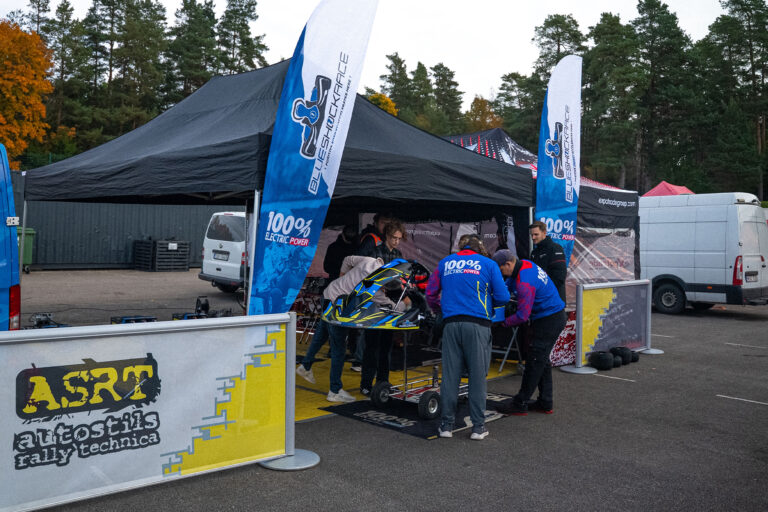
- 6 brand-new batteries + 2 aged backup batteries
- Live quick swap battery system changes (6 active slots used)
- Charging done with standard 3kW grid sources trackside
This live scenario proved that 4H electric racing is already viable with only 6 battery swaps, and future goals aim to reduce this to 4 batteries or less with next-gen battery efficiency.
Learning, Not Just Winning: What Comes Next?
This race was never about taking the gold. It was about setting a standard others must chase, gathering real endurance data, and demonstrating that electric karting can go well beyond 15-minute sprint formats.
Facing off against elite combustion racers — including FIA academy champions and World Champion Tomas Stolcermanis. That speaks volumes about both our technology and our vision for the future of endurance e-karting.
Full race data, swap intervals, and telemetry insights will be released soon for the global racing community.
This is Just the Beginning
From a technical oversight to a strategic recovery, the BSR team showed what’s possible when innovation meets resilience. This 4H race wasn’t just a success — it was a turning point.
Want to challenge yourself?
Try beating the 250 km mark with an electric kart.
We’re ready for the next round.
Contact Information
For Further Inquiries
blueshockrace.com, info@blueshockrace.com, +1 (484) 585-0115 (the U.S.A.), (+371) 2046-5432 (the E.U.)
